Restoring Heat and Cooling When Systems Fail
HVAC Repair in Falls Church for equipment that stops heating, cooling, or cycling properly
When an air conditioning system stops producing cold air or a furnace fails to ignite, the problem often traces to a specific component failure rather than total system breakdown. Metro Air provides heating and cooling repairs in Falls Church for equipment that won't start, cycles too frequently, or produces insufficient heating or cooling output. Troubleshooting and diagnostics identify whether the issue stems from electrical failures, refrigerant leaks, failed capacitors, or sensor malfunctions.
Air conditioning repairs address refrigerant leaks, compressor failures, and frozen evaporator coils that prevent cooling. Furnace repairs handle ignition problems, blower motor failures, and heat exchanger cracks that shut down heating. Emergency HVAC service responds to situations where failed equipment leaves a building without climate control during extreme temperatures.
Arrange an on-site assessment to diagnose the specific component causing your heating or cooling failure.
How Repairs Address Equipment Failures
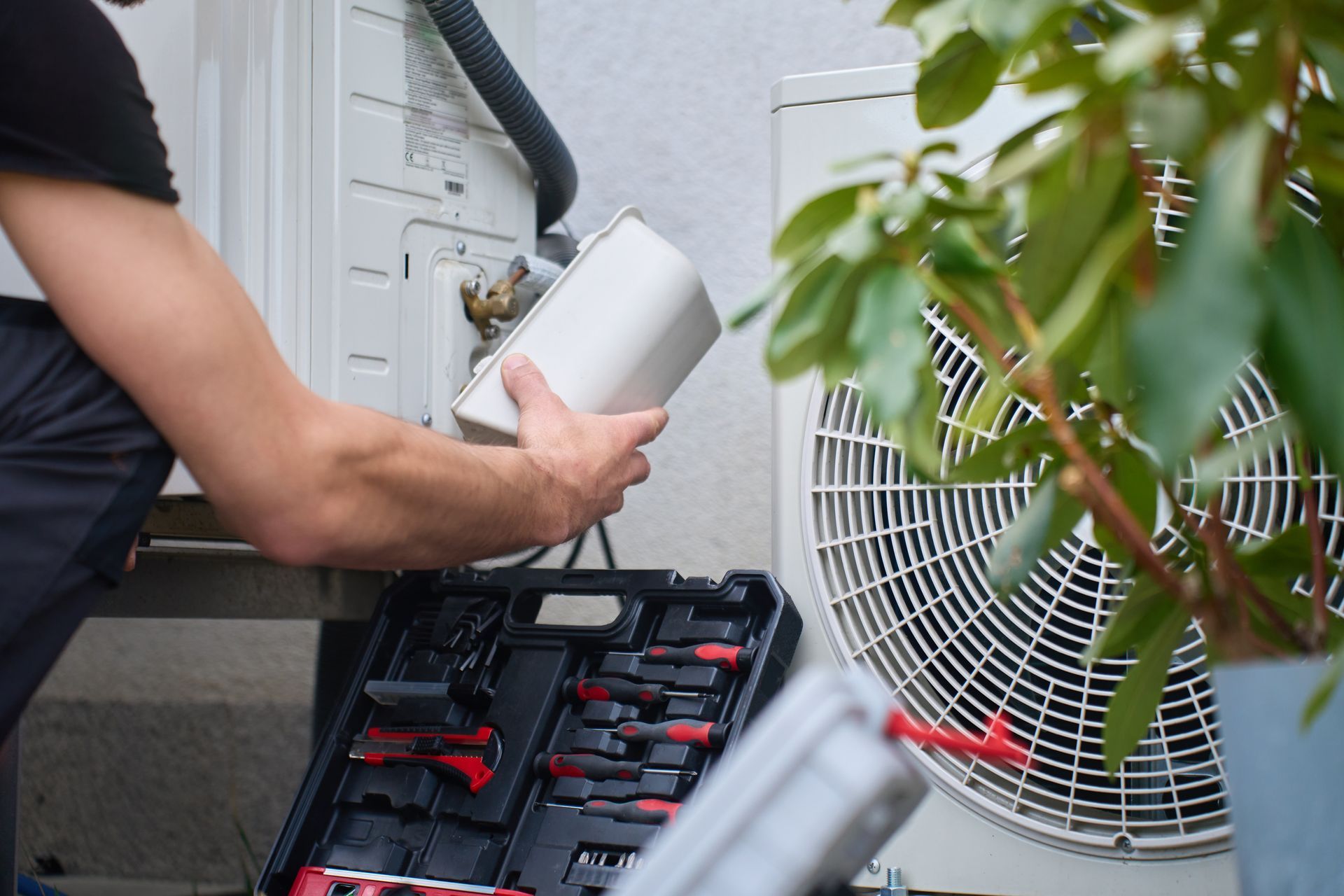
Diagnosing HVAC problems requires testing electrical connections, measuring refrigerant pressures, and checking airflow across heat exchangers and evaporator coils. A system that short-cycles may have a failing thermostat, an oversized compressor, or a refrigerant charge that's too high or too low. Equipment that runs continuously without reaching set temperature often has restricted airflow from clogged filters, blocked condensers, or failing blower motors that can't move enough air through the system.
After the repair is finished, the system will reach and maintain set temperatures without the unusual noises, odors, or cycling patterns that indicated the failure. You'll notice consistent airflow from vents, reduced energy consumption compared to when the system was struggling, and elimination of the specific problem like inadequate cooling or no heat production.
Repairs restore function to the failed component but don't extend the overall lifespan of aging equipment that may develop additional failures. Troubleshooting identifies whether the repair cost justifies fixing the current system or whether the equipment has reached the point where replacement makes more sense financially.
Answers to Frequent Service Questions
Repair situations raise questions about what's causing the failure and how quickly function can be restored.
What causes an air conditioner to stop cooling suddenly?
Common causes include refrigerant leaks that drop system pressure below operational levels, failed capacitors that prevent the compressor from starting, and frozen evaporator coils caused by restricted airflow or low refrigerant charge. Each produces different symptoms that point to the specific failure.
How quickly can emergency HVAC service restore heating or cooling?
Most component failures are repaired within a few hours once the diagnosis is complete and parts are available. Emergency service prioritizes situations where vulnerable occupants or temperature-sensitive operations are affected by the equipment failure.
Why does a furnace start but then shut down before heating?
This pattern typically indicates a failed flame sensor that can't confirm ignition, a cracked heat exchanger triggering a safety shutoff, or a blocked flue preventing exhaust ventilation. The control board shuts down the system when safety sensors detect abnormal conditions.
When should a system be replaced instead of repaired?
Replacement makes more sense when repair costs exceed half the price of new equipment, when the system requires multiple repairs within a single season, or when refrigerant leaks occur in older units using refrigerant that's no longer manufactured. In Falls Church's climate, a system that fails during peak heating or cooling season and requires expensive compressor or heat exchanger replacement often warrants full replacement instead.
What's included in troubleshooting and diagnostics?
The process involves testing voltage at electrical connections, measuring refrigerant pressures and temperatures, inspecting heat exchangers for cracks, checking airflow rates, and verifying that all safety controls function correctly. This identifies the specific failed component rather than guessing based on symptoms alone.
Metro Air diagnoses the specific cause of heating and cooling failures rather than replacing parts based on assumptions. Contact our team at (571) 278-6837 when your system shows signs of malfunction or stops operating entirely.